



Is Parasite SEO Safe?
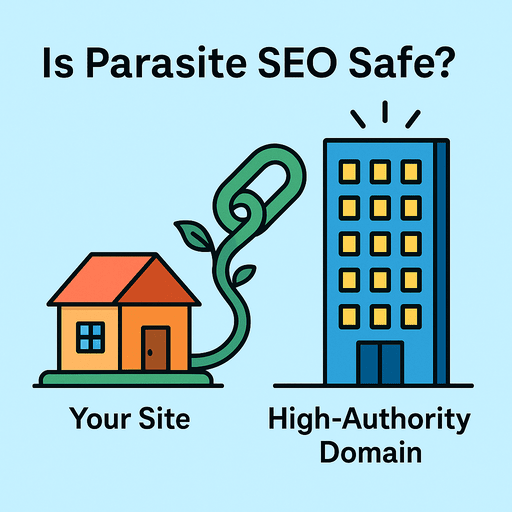
Short Answer: Parasite SEO can rank fast, but it’s risky. It works by placing your link or promotional content on a high-authority website so you can borrow its ranking power. While that can deliver quick visibility, Google’s newer spam policies and E-E-A-T systems are cracking down on this kind of reputation abuse. Safe in the short term? Maybe. Sustainable in 2025? Hardly.
Introduction: When Parasites Go Digital
I get it. Building backlinks the right way is hard. It takes patience, outreach, and a lot of persistence. My own site only just earned its first legitimate backlink, and I couldn’t be prouder. Last week, I published an original SEO article on NewTrafficTail.com, followed their editorial guidelines carefully, chatted with the site host, and low and behold, earned my very first backlink. No shortcuts. No spammy directories. Just genuine contribution and trust.
That’s why parasite SEO fascinates me. It’s the complete opposite approach. Instead of earning authority, you borrow someone else’s. By placing your link on a high-authority platform like Medium, Reddit, or Google Sites, you can sometimes rank overnight. It feels like a clever loophole, but is it safe? Let’s find out.
What Exactly Is Parasite SEO
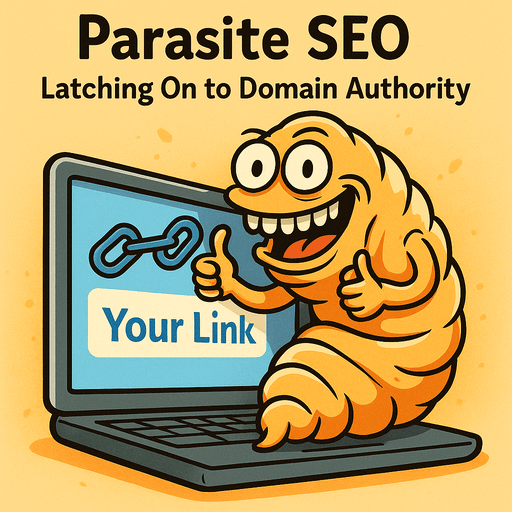
Parasite SEO is when you post your own link or landing page on someone else’s high-authority domain so that their site ranks for your target keyword. You’re essentially “latching on” to their existing Domain Authority to gain exposure, backlinks, or referral traffic without your own domain doing the ranking work.
Typical examples include:
-
Adding optimized links to user-generated posts on Reddit or Quora
-
Publishing short pages or link-embedded blurbs on Google Sites
Commenting with links on any high-authority domain
The goal is to get that page on the host site to rank quickly and redirect traffic or authority to your own website. This approach gained popularity after Google’s Helpful Content Update made it harder for new or low-authority domains to rank independently. For many marketers, it looked like a faster way to gain visibility without the grind of traditional link building.
But as with most shortcuts, there’s a fine line between clever and risky.
Why Marketers Use Parasite SEO
When you’re staring at a low-DA site and a blank backlink profile, parasite SEO can feel like a lifeline. You’ve put in the work, built great content, maybe even landed your first backlink, yet visibility still feels out of reach.
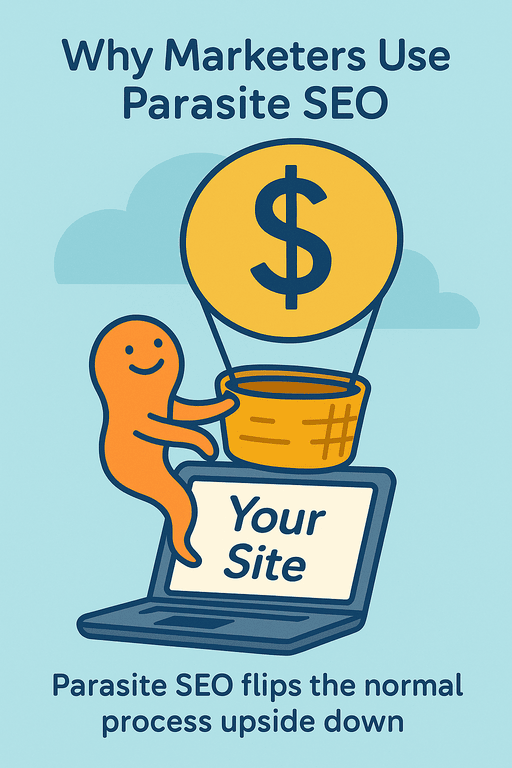
Parasite SEO offers a shortcut. By posting your link or page on high-authority domains, you can ride their credibility to the top of Google faster than your own domain could ever manage.
Here’s the appeal:
-
Faster rankings: Authority sites are indexed rapidly and carry existing trust signals
-
Minimal link building: You skip outreach and let the host domain carry your link
-
Authority borrowing: You leverage the host’s domain power instead of building your own
-
Quick visibility: Great for testing keywords or promoting new services
In short, parasite SEO flips the normal process upside down. Instead of building authority, you temporarily rent it. But just because it works doesn’t mean it’s safe.
The Hidden Risks of Parasite SEO
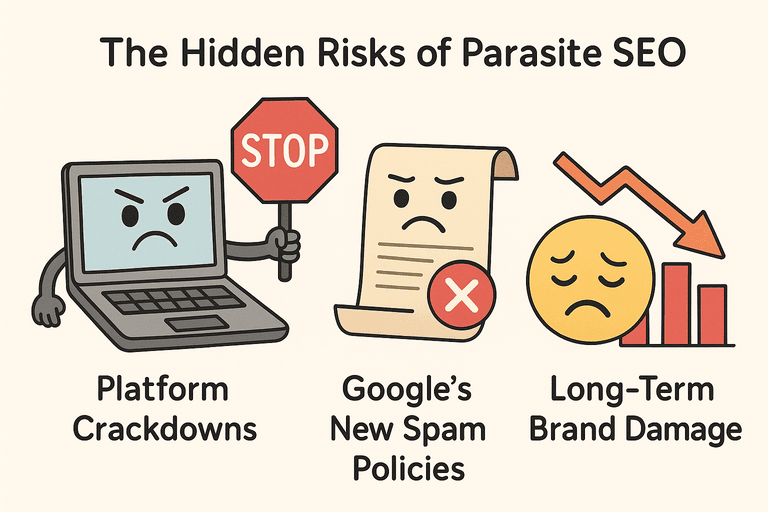
Parasite SEO might sound clever until you realize the host site holds all the control. And lately, those hosts and Google itself have had enough.
Platform Crackdowns
High-authority platforms like Medium, Quora, and Reddit are tightening their rules. Commercial linking and affiliate placements now require disclosures or moderation approval. If your post or link looks overly promotional, you could lose:
-
Your account access
-
Your published content
-
Your backlinks overnight
Even LinkedIn has started limiting visibility for posts that appear to be created for SEO rather than engagement.
Google’s New Spam Policies
In early 2024, Google updated its spam policies to target site reputation abuse, a direct strike at parasite SEO. The rule states that if a site hosts content primarily to manipulate rankings, both the host and the parasite page can be penalized or deindexed. Your link might vanish overnight, and the host’s domain could take your page down to protect its own credibility.
Long-Term Brand Damage
Even if you aren’t penalized, being associated with manipulative link placements can erode your E-E-A-T credibility. Google now evaluates not just content, but the authorship and intent behind every signal. Once your brand is linked to spammy behavior, recovery is slow and painful.
For more on how Google defines black hat versus ethical SEO practices, read my related article What Is White SEO vs Black Hat SEO in 2025. It explains how gray-hat methods like parasite SEO fit into Google’s evolving policy on trust and transparency.
Can Parasite SEO Still Be Done Safely
Yes, but it requires restraint, ethics, and transparency. There are ways to use authority platforms strategically without crossing into manipulation.
You can do parasite SEO safely when:
-
The host allows user-generated content or external linking
-
Your link provides real informational or contextual value
-
You cite credible sources and keep promotional intent low
-
The host content is authentic, helpful, and adds value to its audience
When done carefully, parasite SEO starts to resemble collaborative publishing rather than exploitation. It’s closer to modern digital PR, where you share insight or resources on a reputable domain that naturally benefits both parties.
Safer Alternatives to Parasite SEO
If you want visibility without risking a penalty, try these sustainable alternatives:
-
Guest Posting with Editorial Oversight: Partner with blogs that review and approve content. It’s slower but builds lasting authority.
-
Digital PR and Expert Features: Use LinkedIn to connect with other writers and get featured as an expert in industry articles.
-
Original Research or Case Studies: Publish data-driven insights on your own site that others naturally want to cite.
-
Answer Engine Optimization (AEO): Optimize for AI Overviews, ChatGPT citations, and Bing Copilot summaries. It’s the safe, future-proof way to earn visibility without exploiting another domain’s trust.
These methods help you build authority organically instead of depending on borrowed platforms.
FAQ
Is parasite SEO black hat?
It depends on how you do it. If you spam links across multiple sites to game algorithms, yes. If you add contextual, transparent links on reputable platforms, it’s closer to gray hat.
Can parasite SEO get you penalized?
Yes, indirectly. Google can deindex the host page, penalize the domain, or ignore your link entirely.
Does parasite SEO still work in 2025?
It can work for short-term traffic or quick rankings, but its effectiveness is shrinking as Google tightens link and spam detection.
What’s the safest way to use parasite SEO?
Use it sparingly, add genuine value, and avoid aggressive link placement. Focus on building your own authority in parallel.
Conclusion: From Parasite to Partner
Parasite SEO isn’t inherently evil, but it’s unstable. The danger lies in using it to trick algorithms instead of helping users. In the short term, it might boost visibility. In the long term, it can damage credibility and make your link profile look unnatural.
If you view parasite SEO as a temporary collaboration instead of a loophole, it can complement a broader SEO plan. But the safest and most sustainable results will always come from genuine content, credible backlinks, and transparent partnerships.
If you’re unsure whether your off-page strategy is crossing into risky territory, contact me for help auditing your SEO ecosystem. I’ll help you turn gray-hat tactics into a sustainable, ethical visibility plan that lasts.

0 Comments Add a Comment?