

My SEO Blog

Welcome to My SEO Blog, where I share insights, strategies, and future-focused ideas from my work as an SEO content writer and strategist. Here you’ll find posts on everything from AI-driven search trends and Answer Engine Optimization (AEO) to local SEO case studies and content frameworks I’ve tested with real clients.

I write with two goals in mind:

  1. To make complex SEO topics clear, actionable, and relevant for businesses and creators.

  2. To push the conversation forward—exploring how search is changing in 2026 and beyond.

Whether you’re here for practical tips, in-depth guides, or contrarian takes on SEO’s future, this blog is designed to give you ideas you can use right away.

Need to hire an SEO writer? Contact me today!

Latest blog posts by Kayla Rose Hall

Filters & Sorting
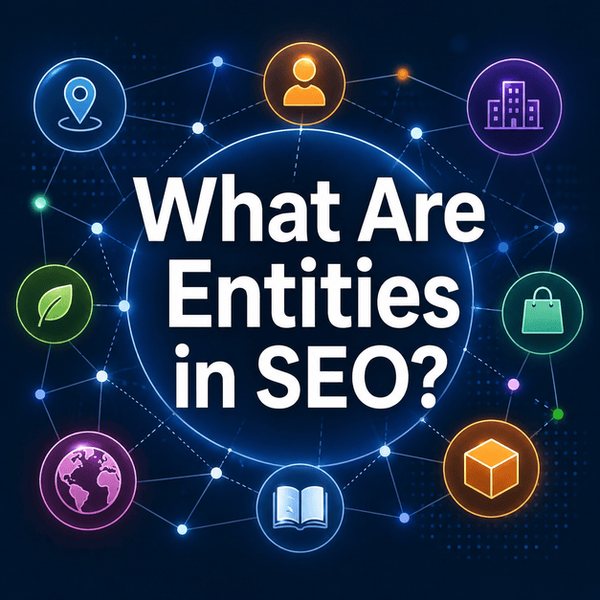
Illustration of interconnected SEO entities, showing how people, places, brands, and concepts connect within modern AI-powered search.

What Are Entities in SEO? The Foundation of AI Search

Entities are people, places, brands, products, concepts, and other identifiable things that search engines understand independently of keywords. They help Google connect information through the Knowledge Graph, understand relationships between topics, and generate AI-powered search results. As search shifts toward AI Overviews, AI Mode, and answer engines, entities have become one of the foundational building blocks of modern SEO.
Square blog image featuring the title

Brand vs. Backlinks: What Matters More for SEO in 2026?

Brand authority and backlinks both matter for SEO in 2026, but they're influencing visibility in different ways. Backlinks remain an important signal for traditional rankings, while brand recognition, entity authority, and reputation are becoming increasingly important for AI Overviews, AI Mode, ChatGPT, Gemini, and other AI-powered search experiences. The businesses seeing the most visibility today aren't choosing between brand and backlinks. They're using backlinks to build a brand that search engines and AI systems recognize, trust, and cite.
Illustration of a marketing funnel, SEO strategy elements, and growth analytics representing how to create marketing funnel SEO content for every stage of the buyer journey.

How to Create Marketing Funnel SEO Content for Every Stage of the Buyer Journey

Marketing funnel SEO content helps businesses create blog posts that match different stages of the buyer journey. Top-of-funnel content attracts new visitors, middle-of-funnel content builds trust and comparison value, and bottom-of-funnel content focuses on conversions. In 2026, successful SEO strategies rely heavily on search intent alignment, funnel-based keyword targeting, and content that supports both traditional rankings and AI-driven search experiences.
A dark blue SEO graphic explaining why Google cites pages that don't rank, featuring a magnifying glass, Google search results, and bold text.

Why Google Cites Pages That Don’t Rank: AI Overviews SEO in 2026

A recent AI Overviews study indicates that nearly 30% of cited domains do not appear in traditional organic rankings for the same queries. The implication is clear: AI Overviews SEO is no longer governed strictly by ranking position. Instead, Google’s systems increasingly rely on passage-level retrieval, semantic relevance, and query fan-out expansion to assemble responses. For SEO professionals, visibility is no longer a ranking-only outcome. It is a retrieval-driven system that can surface content outside the top results if it better satisfies a specific sub-intent.
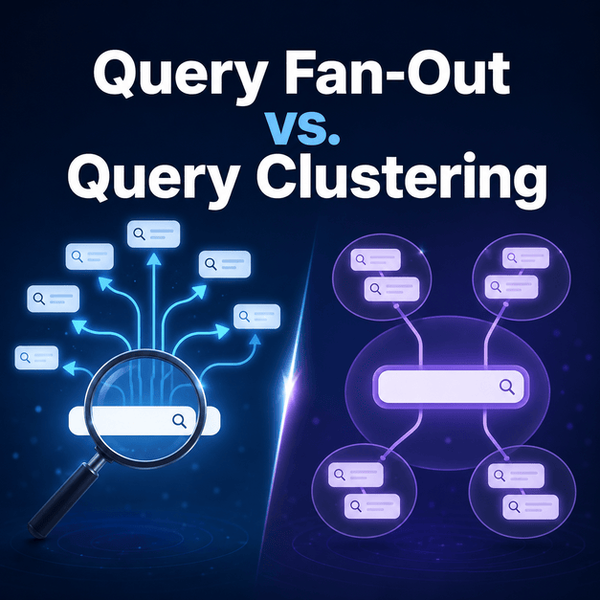
Query Fan-Out vs Query Clustering comparison graphic showing two RAG retrieval strategies with search icons and directional flow diagrams.

Query Fan-Out vs. Query Clustering: What's the Difference in SEO?

Query clustering and query fan-out both help search engines understand and retrieve information, but they serve different purposes. Query clustering groups related searches together based on shared intent, while query fan-out expands a search into multiple related queries to gather broader information. Understanding the difference is becoming increasingly important as SEO shifts from keyword targeting toward topic coverage, entity relationships, and AI-driven search experiences.
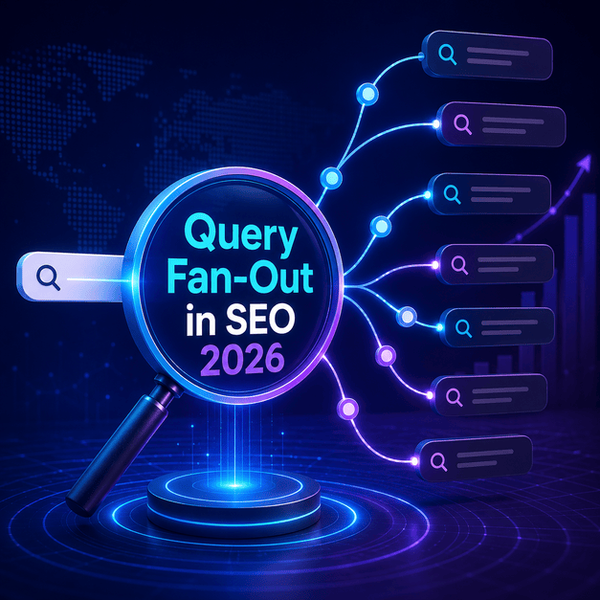
Query Fan-Out in SEO 2026: a single search query branching into multiple sub-queries, visualized through a magnifying glass with radiating search bars.

Why 29% of Google Searches Now Lead to Another Search (Query Fan-Out in SEO 2026)

Why are 29% of Google searches now leading to another search instead of a click? Because AI Overviews in Google Search are changing how users behave. Instead of ending a journey after one query, users increasingly refine, expand, and repeat searches through query fan-out behavior and conversational search. This shift has grown from 21.4% in 2024 to 29% in 2026, according to SparkToro, signaling a major change in search behavior, SEO strategy, and Google search psychology. For SEO, this means optimization is no longer about single keywords—it’s about query paths, topic clusters, and search journeys.

Google Wants to Become the FDA of SEO

Google recently published new guidance telling businesses to be cautious about third-party SEO advice, tools, and AI optimization claims. On paper, the documentation looks practical and consumer-focused. Underneath it, though, is a bigger message: Google wants to become the most trusted voice in SEO itself. As AI-generated SEO advice floods the internet and GEO/AEO hype accelerates, Google appears increasingly uncomfortable letting outside companies define how search optimization should work. The result could push SEO away from its experimental roots and toward something closer to platform-approved compliance.
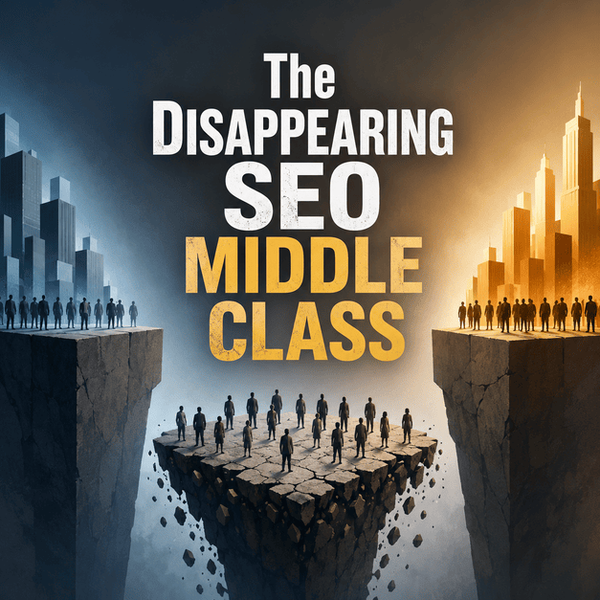
A bold, cinematic illustration depicting “The Disappearing SEO Middle Class,” showing a fractured digital landscape where mid-sized websites are squeezed between dominant brands and niche creators as AI reshapes search visibility.

The Disappearing SEO Middle Class: How AI Overviews Are Reshaping SEO in 2026

SEO in 2026 is shifting fast because of AI Overviews, zero-click search, and changing user behavior. Mid-sized websites that once relied on steady organic traffic are losing clicks even when rankings stay strong. Large brands continue to dominate due to authority, while small niche creators can still succeed through originality and experience. The biggest impact is being felt in the middle, where many sites are seeing traffic decline despite stable visibility.
A bold square blog graphic featuring the title “Google’s May 2026 Core Update Changed How YMYL Content Wins Visibility” in large modern typography against a dark blue AI-inspired background.

Google’s May 2026 Core Update Changed How YMYL Content Wins Visibility

According to Aleyda Solis’ analysis of the May 2026 Google Core Update, one of the most interesting patterns wasn’t simply which websites gained or lost visibility. It was why certain types of sites appeared to perform differently. The update suggests Google may increasingly evaluate YMYL visibility based on source confidence, intent alignment, and result fit rather than broad vertical authority alone. That distinction matters because it changes how SEO teams should think about rankings in the AI search era.
Bold graphic for the blog “Google’s New Search Psychology” exploring how AI Overviews are changing user behavior, attention patterns, and decision-making inside Google Search.

Google’s New Search Psychology

A new study analyzing 846,000 Google search sessions found that users are behaving differently in AI-powered search environments. Instead of clicking quickly, users increasingly pause, scroll, compare listings, revisit earlier results, and spend more time evaluating the SERP itself before making decisions. The findings suggest Google Search is evolving from a navigation tool into a psychological evaluation layer where users deliberate before they click. That shift changes how SEO works because visibility alone is no longer enough. Search results now have to survive scrutiny.
Google's new AI Search Reports in Search Console reveal a groundbreaking layer of SEO data, giving marketers unprecedented insights into how their content performs in AI-powered search results.

Google’s New AI Search Reports Open Up An Entirely New Layer Of SEO Data

Google just introduced dedicated Search Console reporting for AI-powered search experiences like AI Overviews and AI Mode. On the surface, it looks like a reporting update. In reality, it’s one of the more important SEO announcements Google has made in years because it gives website owners direct visibility into how content performs inside generative AI search experiences. For the first time, AI visibility is becoming measurable in a structured way inside Search Console. That creates new opportunities for SEO teams to understand how content surfaces across AI-generated answers, conversational search experiences, and evolving user journeys that don’t always follow traditional ranking behavior.
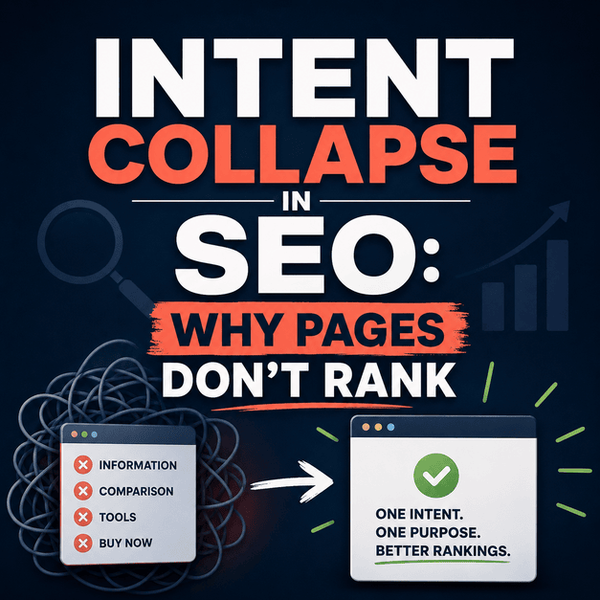
Intent Collapse in SEO concept graphic showing why pages don’t rank due to conflicting search intents. Bold typography highlights the title, paired with a visual contrast between disorganized mixed intent elements and a clear structured “one intent, one purpose” framework, illustrating improved SEO clarity and performance.

Intent Collapse in SEO: Why Pages Don’t Rank

Most SEO content doesn’t fail because it’s poorly written or poorly optimized after publishing. It fails earlier in the process due to intent collapse, where a single page tries to satisfy multiple conflicting user goals at once. When informational, comparative, and transactional intents are combined into one page, clarity breaks down. Search engines struggle to assign relevance, users don’t get a clear outcome, and performance weakens before optimization even matters. As search systems become more intent-driven and AI models increasingly break queries into multiple sub-intents, intent clarity is becoming a critical factor in visibility and citation potential.
What Google’s New AI Search Updates Mean for SEO

What Google’s New AI Search Updates Mean for SEO

Google is expanding AI search with new features including Preferred Sources, Highly Cited labels, and Perspectives-style carousels inside AI Overviews and AI Mode. While these updates may seem small on the surface, they point to a bigger shift happening inside search. Google is increasingly prioritizing trusted sources, recognizable brands, firsthand expertise, and citation visibility inside AI-generated answers. For SEO professionals, this signals a move away from purely ranking-focused optimization and toward authority, entity recognition, and citation-driven visibility.
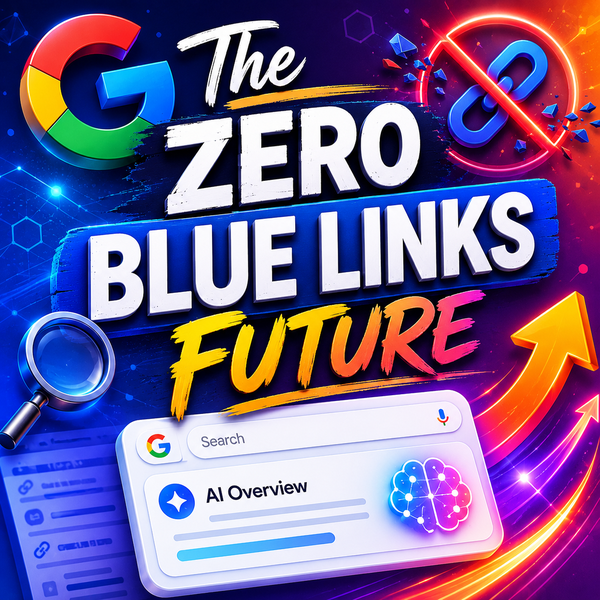
Bold futuristic thumbnail titled “The Zero Blue Links Future,” showing AI-driven search replacing traditional blue links with a neon digital interface, Google-inspired elements, and vibrant tech visuals.

Google’s “Zero Blue Links” Future: How SEO Needs to Adapt

For more than 25 years, Google search has worked the same way. Users type a query, scan a list of blue links, and click through to websites to find answers. That era is ending. At Google I/O 2026, Google outlined the next phase of Search, and in its official announcement on the future of Search, it introduced an AI-first experience built around conversational answers, autonomous agents, and generative interfaces that often reduce or eliminate traditional organic click-through behavior. This marks a structural shift in how search works, not just another feature update. The implication is simple but significant. Search is shifting from a system that sends users to websites into a system that increasingly delivers answers directly inside the interface.
Load More Articles

Subscribe to get sent a digest of new articles by Kayla Rose Hall

This site is protected by reCAPTCHA and the Google Privacy Policy and Terms of Service apply.