



The Disappearing SEO Middle Class: How AI Overviews Are Reshaping SEO in 2026
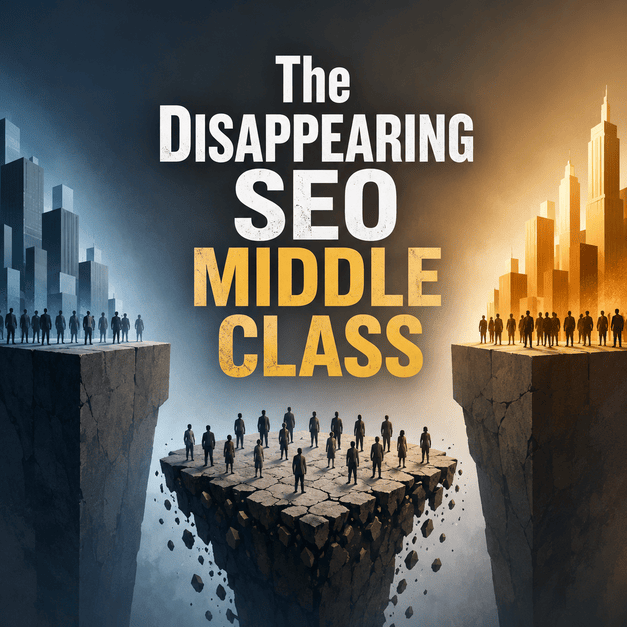
Quick Summary
SEO in 2026 is shifting fast because of AI Overviews, zero-click search, and changing user behavior. Mid-sized websites that once relied on steady organic traffic are losing clicks even when rankings stay strong. Large brands continue to dominate due to authority, while small niche creators can still succeed through originality and experience. The biggest impact is being felt in the middle, where many sites are seeing traffic decline despite stable visibility.
Introduction
For years, SEO followed a predictable pattern. You published content, ranked in Google, and earned traffic. That system created what we can now think of as the SEO middle class, a stable layer of mid-sized publishers and businesses that weren’t huge brands, but still relied heavily on organic search for growth.
In 2026, that structure is breaking down. AI Overviews and zero-click search behavior are changing how users interact with results, and they are reshaping what visibility actually means in SEO.
This is why the SEO middle class is disappearing. The change is not just algorithmic; it‘s structural, and it’s affecting how traffic flows across the entire web.
What Is the SEO Middle Class?
The SEO middle class refers to mid-sized websites that rely heavily on organic search but do not have the authority of major brands or the agility of small niche creators.
These sites often include:
- SaaS companies with content-led growth strategies
- Independent publishers and blogs
- Affiliate and review sites
- Niche ecommerce brands
- Local or regional service businesses with strong blog content
- Industry publications without large media backing
They typically succeed by targeting specific search intent and building topical coverage over time.
For years, this model worked because:
- Rankings led directly to traffic
- Informational content scaled predictably
- Search results were mostly link-based
- CTRs were relatively stable
That equation is now breaking.
How AI Overviews Are Reshaping SEO in 2026
AI Overviews are one of the biggest drivers behind the collapse of traditional SEO traffic patterns. Instead of sending users to websites, Google increasingly provides summarized answers directly on the search results page.
This has shifted SEO from a click-based system to an answer-based system.
Research from SparkToro shows that nearly 60% of Google searches now end without a click. That means most search activity never reaches an external website.
- Rankings stay stable but traffic drops
- Informational content loses value
- CTR becomes more volatile
- SERP features replace traditional blue links
- Visibility no longer guarantees clicks
This is one of the most important SEO shifts in 2026.
Why the SEO Middle Class Is Disappearing
The impact of AI Overviews SEO is not evenly distributed. It is hitting mid-sized publishers and businesses the hardest.
SEO has traditionally had three layers.
Large brands benefit from strong authority, massive backlink profiles, and brand recognition across channels. They also rely less on search alone for traffic.
Small niche creators often succeed through firsthand experience, deep expertise, and highly specific content that builds trust in narrow audiences.
Mid-sized sites are now under pressure because they sit in the weakest structural position. They depend heavily on SEO traffic, lack strong brand insulation, and often compete in saturated keyword spaces. They are also the most exposed to CTR loss from AI Overviews.
This is why the middle layer is disappearing first.
Why AI Overviews Are Changing Search Behavior
AI Overviews are turning Google from a search engine into an answer engine. Instead of sending users to websites, Google increasingly provides summarized answers directly on the results page.
This changes search behavior in several important ways.
Users consume answers without clicking. Content is extracted instead of visited. Rankings matter less than inclusion in summaries. Informational content loses direct ROI.
In the context of SEO trends 2026, this shift is central because it changes what success in search actually means.
It is no longer just about ranking first. It is about being used as a source.
Traditional SEO vs AI Overviews SEO
Traditional SEO | AI Overviews SEO |
Rankings drive traffic | Visibility does not guarantee clicks |
Keyword targeting is primary | Topical authority is primary |
SERPs are link-based | SERPs are answer-based |
Success equals traffic growth | Success equals citation and visibility |
Content competes for clicks | Content competes for inclusion in answers |
This explains why many sites feel like they are doing everything right but still losing traffic. They are optimizing for a system that no longer behaves the same way.
What Content Works in AI Overviews SEO
Content that performs well in AI Overviews SEO tends to prioritize clarity, structure, and originality.
Strong-performing content usually includes direct answers to questions, deep topical coverage, and firsthand expertise. It also tends to include original data or perspectives that cannot be easily replicated by AI systems.
Well-structured content with clear sections is more likely to be extracted and cited, especially when it demonstrates trust and authority.
Why Small Niche Sites Still Have an Advantage
Even with these changes, small niche sites are not disappearing. In many cases, they are becoming more resilient in AI-driven search.
They often provide real-world experience, deep specificity, and personal perspective that AI systems cannot easily replicate. They also tend to build stronger trust within smaller audiences.
In SEO trends 2026, originality matters more than scale. That shift benefits niche creators who focus on depth rather than volume.
Is SEO Still Worth It in 2026?
Yes, but the definition of SEO success is changing.
If SEO means ranking and predictable traffic growth, then it is less stable than before. If SEO means building visibility across search engines and AI systems, then it is more important than ever.
SEO is no longer just a traffic channel. It is becoming a visibility system that spans search, AI tools, and content platforms.
What Businesses Should Focus on Now
To adapt to AI Overviews SEO and SEO trends 2026, businesses need to move beyond keyword-first strategies.
Key priorities include building brand recognition outside of search, creating content based on firsthand expertise, and developing strong topical authority. Original research and unique insights are becoming more important than volume alone.
Businesses also need to optimize for citations, not just rankings, and reduce dependency on any single traffic source.
Final Thoughts
The SEO middle class emerged during a period when search was mostly link-based and traffic flowed predictably from rankings. That structure is changing as search engines evolve into answer systems instead of referral systems.
Large brands will continue to dominate due to authority and trust. Small niche creators will still succeed through depth and authenticity. The biggest disruption is happening in the middle, where many sites are losing traffic even as visibility holds steady.
SEO is not dying, but it is changing into something new. Success is no longer just about ranking in Google. It is about being recognized, cited, and trusted across AI-driven search experiences.
Frequently Asked Questions
What is the SEO middle class?
The SEO middle class refers to mid-sized websites that depend heavily on organic search traffic but do not have the massive authority of major brands.
Why are AI Overviews hurting SEO traffic?
AI Overviews reduce the need for users to click through to websites by summarizing answers directly in search results.
What is zero-click SEO?
Zero-click SEO refers to search behavior where users get answers without leaving the search engine environment. This trend has grown significantly as SERP features expand.
Are small niche websites still worth building in 2026?
Yes. Niche sites with original experience and expertise can still perform well in AI-driven search environments.
Is keyword research still useful?
Yes, but it must be paired with topical authority, intent understanding, and information gain.
Is SEO dying?
No. It is shifting from traffic acquisition toward visibility, authority, and AI-era citation systems.
How can mid-sized sites adapt to AI search?
Mid-sized publishers should focus on:
- Building brand recognition
- Creating original content
- Demonstrating expertise and experience
- Developing loyal audiences
- Strengthening internal topical authority
- Diversifying traffic beyond Google
Does ranking #1 still matter in 2026?
Yes, but rankings alone no longer guarantee traffic. AI summaries, featured snippets, and answer engines can reduce click-through rates even for top-ranking pages.

0 Comments Add a Comment?